ISO 22301 Certification in Qatar – Requirements, Cost, Process & Get Certified with SCS
Businesses do not always get a warning before an unexpected disruption affects their operations. A technology failure, supplier problem, facility issue, workforce shortage or other incident can quickly affect customers, revenue and day-to-day activities.
ISO 22301 certification gives organizations a structured way to prepare for disruption, respond when something goes wrong and recover important business activities. It is the international standard for a Business Continuity Management System (BCMS).
If your organization is looking for ISO 22301 certification in Qatar, SCS can help you understand the certification requirements, define the appropriate scope and move through the certification process.
Get ISO 22301 Certification in Qatar with SCS
ISO 22301 is relevant to organizations that need to keep important activities running when normal operations are interrupted. It can be applied to businesses of different sizes and across a wide range of sectors.
For a company in Qatar, certification can provide a structured approach to business continuity rather than relying only on informal contingency arrangements.
SCS provides certification services for organizations seeking to demonstrate that their Business Continuity Management System meets the requirements of ISO 22301.
If you already have a BCMS in place, SCS can discuss the certification route with you. If you are preparing for certification, the first step is to understand your organization, activities, locations and intended certification scope.
Ready to discuss your requirements?
Make an Enquiry with SCS:
https://scscertification.com/contactus.php
Why Businesses in Qatar Choose ISO 22301 Certification
Business continuity is relevant wherever an interruption can affect important operations. For some companies, the main concern may be technology or data. For others, it may be suppliers, facilities, equipment, employees, transportation or critical services.
ISO 22301 provides a management-system approach for identifying these issues and preparing the organization to deal with them.
Organizations in Qatar may consider ISO 22301 certification when they want to:
- Strengthen their approach to business continuity
- Identify critical business activities and dependencies
- Prepare for operational disruption
- Establish clearer response and recovery arrangements
- Improve resilience across important processes
- Demonstrate their commitment to continuity and preparedness
- Meet customer, contractual or business requirements
- Support relationships with larger organizations and international customers
Certification is not simply about having a business continuity document. It involves establishing, implementing, maintaining and continually improving a Business Continuity Management System.
What Is ISO 22301 Certification?
ISO 22301 is an international standard for Business Continuity Management Systems.
A BCMS helps an organization understand which activities are critical, assess risks that could interrupt those activities and establish arrangements for responding to and recovering from disruption.
ISO 22301 certification involves an independent assessment of the organization's management system against the applicable requirements of the standard.
The exact certification scope depends on the organization. It may include particular business activities, functions, facilities or locations.
How to Get ISO 22301 Certification in Qatar
The certification process depends on the organization's size, activities, locations and existing management system. A typical certification journey includes the following stages.
1. Discuss Your Certification Requirements
The process starts by understanding your organization and what you want the certification to cover.
This can include your business activities, locations, number of employees, operational complexity and intended scope.
2. Define the Certification Scope
The certification scope describes the activities and organizational areas covered by the ISO 22301 certification.
A clearly defined scope helps ensure that the assessment reflects the actual organization and its operations.
3. Establish and Implement the BCMS
The organization develops and implements its Business Continuity Management System in accordance with ISO 22301 requirements.
This can involve business impact analysis, risk assessment, continuity strategies, response arrangements, recovery planning, testing and other relevant processes.
4. Stage 1 Audit
Stage 1 is used to review the organization's readiness for the certification audit and examine relevant aspects of the management system.
5. Stage 2 Certification Audit
Stage 2 involves assessing the implemented Business Continuity Management System against the requirements of ISO 22301.
The audit looks at how the system operates in practice, rather than only reviewing documented information.
6. Address Findings, Where Applicable
If findings are identified during the certification process, the organization addresses them through the applicable corrective-action process.
7. Certification Decision
Following successful completion of the applicable certification activities, a certification decision is made in accordance with the certification process.
8. Surveillance and Recertification
Certification does not mean the work stops after the initial audit. Ongoing surveillance and later recertification activities help maintain the management system and its certification.
If you are unsure where your organization currently stands, speak with SCS about your certification requirements.
ISO 22301 Certification Requirements
An organization preparing for ISO 22301 certification needs to establish a Business Continuity Management System appropriate to its activities and circumstances.
Important areas can include:
- Understanding the organization and its context
- Identifying interested parties and relevant requirements
- Leadership and management responsibilities
- Business continuity objectives
- Risk and opportunity planning
- Business Impact Analysis
- Risk assessment
- Business continuity strategies
- Business continuity procedures and plans
- Incident response
- Communication arrangements
- Recovery arrangements
- Exercising and testing
- Monitoring and measurement
- Internal audits
- Management review
- Corrective action
- Continual improvement
The level of detail required will vary from one organization to another. A small trading company and a large organization with several critical facilities will not necessarily have the same continuity requirements.
How Much Does ISO 22301 Certification Cost in Qatar?
There is no single ISO 22301 certification price that applies to every organization.
The certification quotation can depend on several factors, including:
- Number of employees
- Number of locations
- Certification scope
- Nature of business activities
- Operational complexity
- Critical processes
- Shift patterns
- Outsourced activities
- Existing management systems
- Audit requirements
For this reason, certification costs are normally determined after understanding the organization and its proposed certification scope.
If you are comparing ISO 22301 certification costs in Qatar, providing accurate information about your organization will help the certification body determine the appropriate certification arrangements.
Request a quotation from SCS to discuss your requirements.
https://scscertification.com/contactus.php
ISO 22301 Certification for Businesses Across Qatar
ISO 22301 is not limited to one particular industry. Any organization that needs to maintain important activities during disruption can consider a Business Continuity Management System.
Oil and Gas
Oil and gas businesses often depend on complex operations, suppliers, contractors, equipment, technology and logistics. ISO 22301 can provide a structured framework for addressing continuity and recovery requirements.
Marine and Shipping
Marine and shipping companies can face disruption involving vessels, ports, transportation, suppliers, personnel and supporting services. A structured BCMS can help organizations prepare for and respond to such interruptions.
Trading Companies
Trading businesses may rely on suppliers, customers, inventory, communication systems, logistics and financial processes. Business continuity planning can help identify important dependencies and recovery priorities.
Construction and Engineering
Construction and engineering organizations often coordinate employees, subcontractors, equipment, materials and multiple project activities. Continuity planning can help address disruptions that could affect project delivery.
Logistics and Transportation
For logistics companies, delays or failures involving transport, warehouses, suppliers, technology or routes can have an immediate operational impact. ISO 22301 provides a framework for preparing continuity arrangements.
Banking and Financial Services
Financial organizations depend on critical processes, technology, people, facilities and third-party services. Business continuity is therefore an important consideration for maintaining essential activities.
IT and Telecommunications
Technology and telecommunications companies frequently provide services that customers depend on continuously. ISO 22301 can support a structured approach to incident response, continuity and recovery.
Healthcare
Healthcare organizations have critical services that may need to continue during disruptive events. Business continuity arrangements can cover facilities, personnel, suppliers, technology and other essential resources.
Manufacturing
Manufacturers may depend on machinery, utilities, raw materials, employees, suppliers and distribution networks. A BCMS can help identify critical activities and establish appropriate continuity arrangements.
Hospitality and Professional Services
Hotels, hospitality businesses and professional-service organizations can also use ISO 22301 to strengthen their approach to operational disruption, customer service and recovery.
ISO 22301 Certification Across Qatar
SCS can support organizations seeking ISO 22301 certification in Qatar according to their applicable certification requirements and scope.
This includes businesses operating in and around major commercial and industrial areas such as:
- Doha
- Al Rayyan
- Al Wakrah
- Al Khor
- Umm Salal
- Al Daayen
- Al Shamal
The certification requirements do not change simply because a business is located in a particular municipality. The organization's activities, scope, locations and operational circumstances are more important when determining the appropriate certification arrangements.
Who Should Consider ISO 22301 Certification?
ISO 22301 may be suitable for organizations that depend on critical processes, people, technology, facilities, suppliers or services and need a structured approach to managing disruption.
This can include:
- Large companies
- Small and medium-sized businesses
- Oil and gas organizations
- Contractors and suppliers
- Trading companies
- Marine and shipping businesses
- Logistics providers
- Financial organizations
- IT and telecommunications companies
- Healthcare organizations
- Manufacturers
- Professional-service businesses
- Organizations serving international customers
If customers, partners or contracts expect your organization to demonstrate business continuity capability, ISO 22301 certification may also be worth considering.
ISO 22301, Business Continuity Plans and Disaster Recovery
These terms are related, but they are not the same thing.
ISO 22301 is the international standard used for establishing and certifying a Business Continuity Management System.
A BCMS is the management system an organization uses to manage business continuity.
A Business Continuity Plan describes arrangements for responding to particular disruptions and maintaining or recovering important activities.
Disaster recovery generally focuses more specifically on restoring technology, systems, data or related capabilities following an incident.
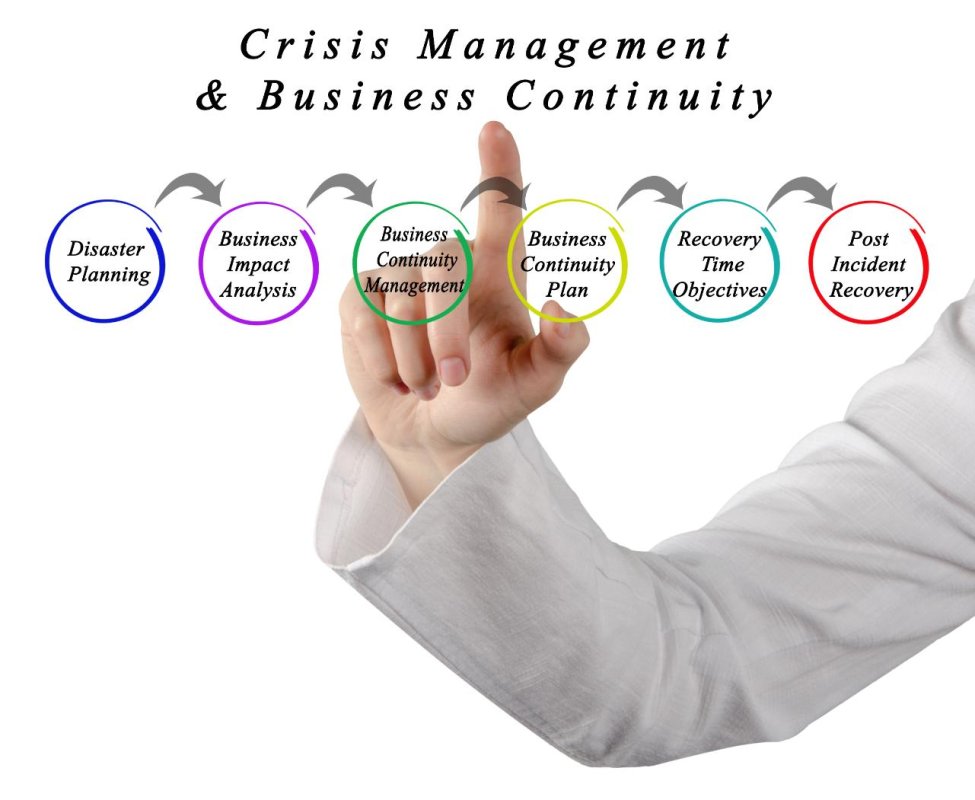
Business Impact Analysis helps an organization determine which activities are important, what could happen if they are interrupted and how quickly they may need to be recovered.
Together, these elements can form part of a broader approach to organizational resilience.
Why Choose SCS for ISO 22301 Certification?
Choosing a certification body is an important decision because certification involves an independent assessment of your management system.
SCS works with organizations seeking management-system certification across different business sectors and organizational environments.
For ISO 22301 certification, the certification approach is based on the organization's actual activities, locations and certification scope.
Whether your business is based in Doha, Al Khor, Al Rayyan, Al Wakrah or another location in Qatar, you can discuss your certification requirements with SCS before beginning the certification process.
If you are ready to move forward, SCS can discuss your requirements and provide information about the applicable certification process and quotation.
Ready to Get ISO 22301 Certified in Qatar?
Looking to get ISO 22301 certified? Contact SCS to discuss your organization, certification scope and requirements.
Make an Enquiry with SCS:
https://scscertification.com/contactus.php
SCS REGIONAL AND INTERNATIONAL OFFICES
REGIONAL OFFICES
UAE OFFICE
SCS Certification
6th Floor Salaam Bldg,
Office 9 Al Marakib St,
Al Danah, Zone 1,
Abu Dhabi, UAE.
Phone: +971 50 302 4312
SAUDI ARABIA
SCS Certification (Partners)
7713, King Abdulaziz Street,
Al Dawasir, Dammam, 32416
Kingdom of Saudi Arabia
Phone: +966 58 245 8722
INTERNATIONAL OFFICES
UK OFFICE
SCS CERTIFICATION EUROPE LIMITED
Office 6996,
58 Peregrine Road,
Hainault, Ilford, Essex,
United Kingdom IG6 3SZ.
CANADA OFFICE
SCS Certification (E) Limited
Oaklea Blvd,
Brampton, ON
L6Y 5A2, Canada.
Phone: +1 437 410 8055
INDIA OFFICES
CHENNAI
Building bearing No.19/35, V 270, Situated on First Floor,
Mount Road, Little Mount,
Chennai – 600015, India.
BANGALORE
Bangalore, Karnataka, India.
Common Phone: +91 97903 25044
Need ISO 22301 Certification for Your Business?
Speak with our certification specialists to understand certification requirements, audit process, implementation timelines and accredited certification services.