SOC 2 Operational Evidence — Availability, Recovery and Processing Integrity
A recovery test restores the database, but customer transactions remain incomplete. Elsewhere, a service stays online while duplicate records reach a customer report. Availability and correct processing need related but distinct explanations.
For a SOC 2 discussion, connect the service commitments to what the organisation evaluates and the evidence it retains. This article combines availability, recovery and processing examples in one operational review, keeping the focus on relevant commitments rather than promising uninterrupted or error-free service.
The proposed categories and examination basis should be agreed with the practitioner. AICPA's Trust Services Criteria resource provides the professional starting point.
Define the operational result being relied on
Identify the service, relevant customer commitments and critical supporting activities. Keep response times, availability measures, restoration targets and processing expectations distinguishable. Their definitions, assumptions and measurement periods may differ.
Record what the operator delivers and what the customer or another provider must do. A data-centre operator may restore a facility service while an application owner performs application recovery. A transaction processor may receive incomplete input that needs an authorised correction before processing can continue.
Map commitments to operational evidence
|
Commitment or concern |
Evidence connection |
Limit to explain |
|
Service availability |
Capacity, monitoring, incidents and continuity arrangements |
Which service and conditions the measure covers |
|
Recovery capability |
Backup, restore, failover and evaluation records |
Tested scope and excluded activities |
|
Data-loss target |
Data protection arrangements and relevant test results |
Assumptions about data and dependencies |
|
Complete processing |
Input/output reconciliation and exception records |
Which population and cut-off were checked |
|
Accurate authorised output |
Validation, approval and correction trail |
What the checks can and cannot detect |
Use the actual definitions and operating arrangements. This is a review aid, not a required uniform service-level agreement or testing formula.
Explain capacity and dependency assumptions
Describe how relevant capacity information reaches operational decision-makers. Retain decisions where workload, infrastructure or supplier conditions change. A graph without its source, thresholds or management response may leave the important question unanswered.
For data centres, relevant dependencies may include power, cooling, connectivity, staff and external support. For hosted applications, dependencies may include provider services, identity systems and external processing. Explain whether supposedly independent alternatives share a point of failure.
The Malaysia SOC 2 guide gives country context for hosting and service-provider enquiries. It does not determine an individual service's recovery capability.
Follow a backup through restoration
Connect the backup activity to recovery access, relevant configurations and restoration evaluation. Identify failures, missing items and recovery dependencies. A successful scheduled job is evidence about that job; it does not automatically establish that the complete customer service was restored.
For a recovery exercise, retain objectives, participants, assumptions, actual results, limitations and assigned follow-up. NIST's contingency planning guidance provides useful background on recovery planning. It is supporting guidance rather than an additional universal SOC 2 rule.
Select methods appropriate to the operation and objectives, with agreed safeguards. This article does not prescribe a live interruption of customer services or a universal test frequency.
Trace processing from input to output
For a selected transaction or batch, identify the authorised input, validation, processing, output and relevant reconciliation. Record rejected, duplicated or missing items and how they are investigated. Explain corrections and who can authorise them.
Where an output is wrong, retain the original facts and the correction trail. Re-running a process successfully can help demonstrate the response, but it does not change the original result. Describe customer effects and any action taken under the relevant arrangements.
Processing integrity does not mean that every conceivable error is impossible. The assessment concerns the relevant described system, commitments, controls and engagement.
An illustrative combined service failure
A fictional provider supports a payment-related service in the GCC. During a provider outage, processing moves to an alternative environment. Service access returns, but a reconciliation identifies duplicate submissions and a batch that did not complete.
The organisation separates three findings: restored access, incomplete processing and duplicate handling. It retains failover records, batch sources, reconciliation decisions and authorised corrections. The exercise or incident report states which outcomes were demonstrated and which gaps remain.
The example illustrates why one “recovery successful” label is insufficient for every operational question. It is not an SCS client case or a conclusion about assurance. See the existing Oman, Qatar, Kuwait and Bahrain SOC 2 guide for regional enquiry context.
Bring the operating evidence together
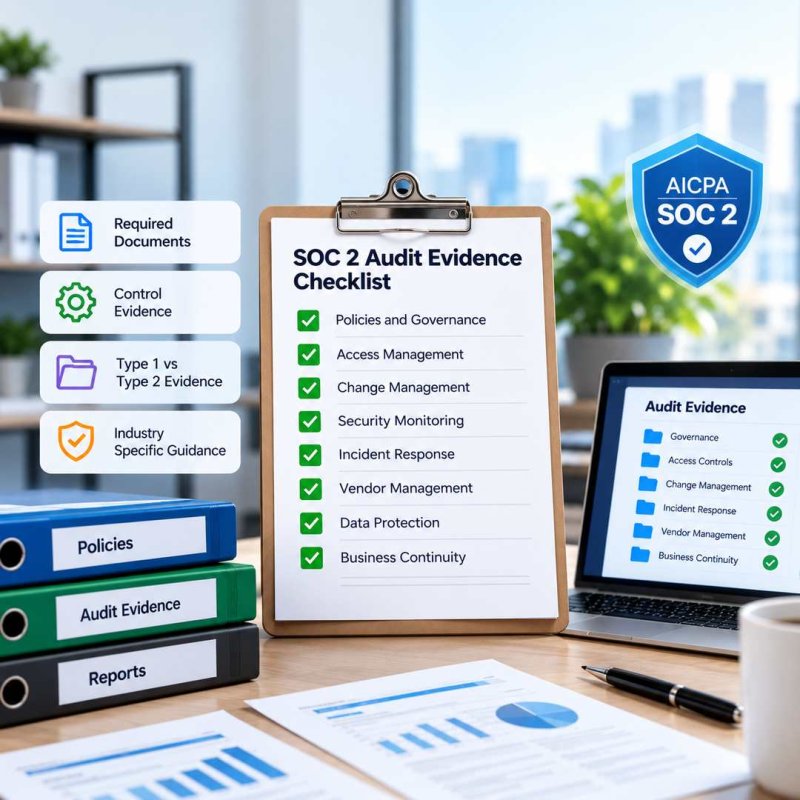
Prepare a service-commitment record, important dependency map, selected recovery evidence and relevant processing trail. Add known issues and changes. The SOC 2 evidence checklist remains the broader preparation resource.
For a wider business continuity management-system requirement, use the established SCS ISO 22301 service page. Keep that requirement separate from the proposed SOC 2 reporting engagement.
Send SCS the service and customer requirement to discuss scope, available operating evidence and the applicable independent examination arrangements.
Need ISO Certification for Your Business?
Speak with our certification specialists to understand certification requirements, audit process, implementation timelines and accredited certification services.